
News
Georgia Supreme Court Disbars Attorney After Finding Client Settlement Funds Were Misused Across Multiple Cases
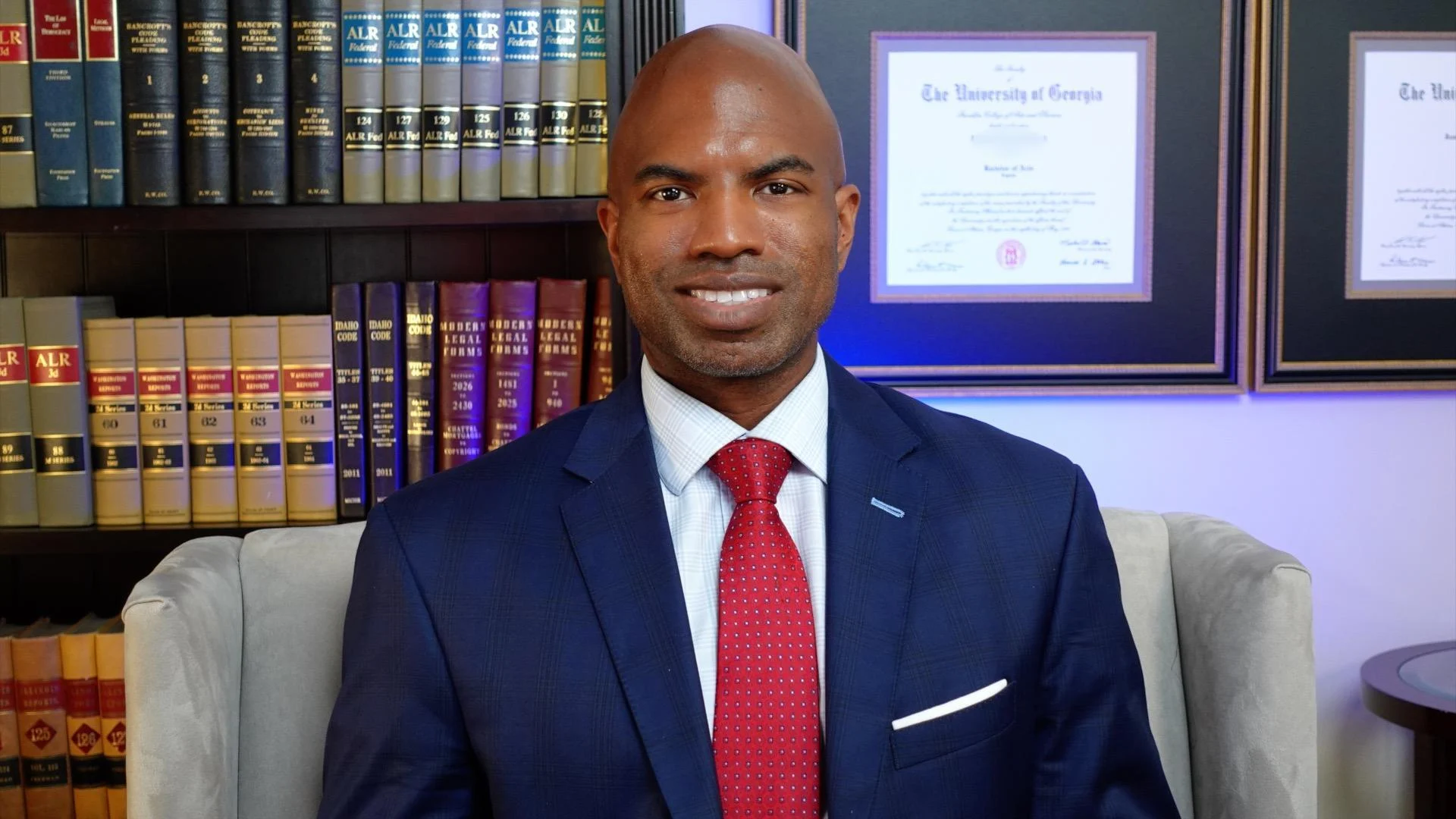
The Supreme Court of Georgia has disbarred Atlanta attorney Hakeem Bertrand Brock after finding that he repeatedly mishandled client trust accounts, used money belonging to clients to cover other financial obligations, and engaged in dishonest conduct across multiple legal matters, including cases involving wrongful death and personal injury settlements.
In an October 14 decision, the court ordered Brock’s name removed from the official roll of attorneys authorized to practice law in Georgia. The ruling followed two formal disciplinary complaints encompassing seven separate matters, including problems with two Interest on Lawyers’ Trust Accounts (IOLTA) and misconduct involving five clients. The justices also ruled that Brock must make full restitution to all affected clients before he can seek readmission to the State Bar.
The decision describes a pattern of financial mismanagement and client neglect that continued despite an earlier disciplinary reprimand. In 2019, Brock had already been disciplined over his handling of a firm trust account and his failure to properly supervise a nonlawyer employee. At that time, he had represented to the court that he had corrected his trust-account practices.
The subsequent investigation found that those problems had not been resolved.
According to the opinion, Brock acknowledged that he treated his IOLTA accounts much like ordinary checking accounts, deposited personal money into them, and could not reliably determine how much of the money belonged to clients or other third parties. He also admitted that he knew mixing personal and client funds was unethical but continued the practice. In one account, he did not begin maintaining trust-account ledgers until approximately a year after it had been opened.
The State Bar received notices that checks drawn on two separate trust accounts had been returned for insufficient funds. Investigators also found that checks did not identify the accounts as attorney trust accounts and that money from newer client recoveries was being used to cover shortfalls involving funds from earlier matters.
The court rejected Brock’s explanations that fraudulent activity and banking problems were responsible for the overdrafts. It also found that his decision to use money belonging to one client to satisfy obligations owed to another violated professional-conduct rules governing the safekeeping of client property and prohibited conduct involving dishonesty.
The financial problems were not limited to bookkeeping errors. The disciplinary record described clients who were left without settlement proceeds, medical bills that went unpaid, cases that were dismissed after missed deadlines, and documents that misrepresented what had happened in their legal matters.
One of the most serious matters involved a wrongful death claim arising from the death of a client’s child. Brock received a $100,000 settlement in February 2021 and deposited the proceeds into his trust account. The client signed a release in March of that year, but Brock subsequently stopped communicating with her. He did not establish an estate for the deceased child or pay the medical bills the client expected to be handled from the recovery.
The client repeatedly attempted to obtain information about the settlement. According to the court’s account, she was eventually informed by Brock’s former paralegal that the trust account had a negative balance and that the settlement money was gone. Bank records showed that the account contained less than $9,000 in January 2022, despite the earlier $100,000 recovery.
A $60,000 cashier’s check payable to the client was obtained in April 2022, but it was never delivered to her. Brock maintained that he was entitled to retain $40,000 as his attorney fee. The court questioned the evidentiary basis for finding that the proposed fee was unreasonable under the circumstances, noting that the record did not establish what fee arrangement, if any, the client had agreed to. However, the justices made clear that this uncertainty did not excuse the other misconduct. Brock had initially converted the settlement proceeds for his own use, failed to maintain the required trust-account records, and did not provide the client with a written settlement statement.
The court also reviewed a separate personal injury case in which Brock filed a lawsuit on behalf of a client injured in a vehicle accident but failed to take the steps necessary to move the litigation forward. The case was dismissed for want of prosecution. Rather than accurately explaining the dismissal, Brock told the client that he had recovered $15,000 and that she would receive $6,000.
He later gave the client an undated settlement statement that described a reduced attorney fee and payments to medical providers. The document created the impression that the matter had been resolved through an insurance settlement, although no such settlement had occurred. Brock eventually provided the client with a cashier’s check drawn on his IOLTA account, but the court found that funds belonging to another client had been used to make the payment. The client’s medical providers were not paid until after she filed a grievance.
Another client hired Brock and attorney Michael Powell to handle three separate cases. In one matter, Brock failed to respond to discovery requests, resulting in dismissal. He then failed to refile the case within the applicable renewal period, leaving the client’s claim barred by the statute of limitations.
When the client challenged his handling of the case, Brock maintained that the dismissal had been deliberate and based on causation problems. The disciplinary record, however, showed that he had admitted his failure to meet discovery requirements and to file the necessary renewal action.
In another of the client’s cases, Brock represented that a claim had settled for $6,666.66 and presented what he described as a hold-harmless agreement prepared by an insurance company. The insurer had not provided the document. The client testified that she had never seen or signed it, and the Special Master found that her signature appeared to have been forged. The court described the document as deliberately misleading.
The handling of the purported settlement created additional financial questions. After the client filed a grievance, Brock withdrew $8,368 from his trust account and obtained two cashier’s checks, one for $3,418 and another for $4,950. Only the $3,418 check was delivered to the client. The remaining funds were not accounted for in the disciplinary record. Brock also failed to promptly satisfy a medical lien, and the client’s Social Security benefits were subsequently garnished.
The court separately examined a motor vehicle injury case in which Brock failed to notify the client of a mediation and a pretrial conference. Neither Brock nor the client appeared, and the case was dismissed. Brock acknowledged that calendaring errors contributed to the problem. The court upheld findings that he had failed to provide diligent representation, keep the client informed about important developments, and properly supervise staff communications.
In another case involving a woman who slipped and broke her leg at a property, Brock failed to adequately prepare the client for her deposition and did not timely respond to the defendants’ motion for summary judgment. The defense argued that the property owner was not liable because the woman had slipped on rainwater. Brock later submitted affidavits from witnesses disputing that account, but the filings were late and were not considered. Summary judgment was granted against the client. Brock acknowledged that a timely response supported by the available evidence could likely have defeated the motion.
The Supreme Court did not adopt every finding made by the Special Master without qualification. In its review, the justices questioned whether the evidence supported three particular rule violations: a finding that Brock violated the rule governing responses to disciplinary authorities in connection with the fabricated hold-harmless agreement; a communication-related violation in the premises liability matter; and a finding that his claimed $40,000 fee in the wrongful death case was unreasonable. The court explained that the evidence did not establish all the elements necessary for those particular findings.
Those questions did not change the outcome. The justices concluded that the remaining violations, including Brock’s own admissions concerning his trust accounts and conduct in multiple client matters, were independently sufficient to warrant disbarment.
Brock challenged the disciplinary recommendation, arguing that the Special Master had relied too heavily on a report submitted by the State Bar and had not independently evaluated the evidence. He also disputed several factual findings, attributing some of the financial problems to fraudulent activity, banking errors, and the actions of a former paralegal. The court rejected those arguments, finding that the Special Master had considered his explanations and was entitled to make credibility determinations based on the testimony and evidence presented.
Brock had sought a one-year suspension rather than disbarment. The court rejected that request, pointing to the number and seriousness of the violations, the repeated dishonesty, the prior disciplinary history, and the harm to clients. The opinion also identified aggravating circumstances that included a dishonest or selfish motive, a pattern of misconduct, multiple offenses, vulnerable clients, and indifference to making restitution.
The justices considered Brock’s arguments about personal and professional difficulties during the relevant period, including the financial effects of closing a business during the COVID-19 pandemic, staffing disruptions, and caregiving responsibilities. They concluded those circumstances did not justify the repeated misconduct documented in the disciplinary proceedings.
The opinion also references a separate disciplinary matter involving Powell, who had worked with Brock on some of the client cases. The State Bar filed a formal complaint against Powell concerning related conduct, and the Supreme Court rejected Powell’s request for a public reprimand in August 2025. Brock’s disbarment, however, was based on the violations established in his own disciplinary proceedings.
The October 14 decision was issued per curiam, with all justices concurring. In addition to disbarring Brock, the court made clear that any future application for readmission must be preceded by full restitution to every affected client, with proof submitted to both the Supreme Court and the State Bar of Georgia.
The ruling removes Brock from the list of attorneys authorized to practice law in Georgia. It also leaves restitution as a condition he must satisfy before he can pursue a return to the profession.
About the author
Mitchell Keller writes for Lawlova.com News, covering developments involving lawyers, judges, and the legal system. His background began in radio at age 16, followed by work in his family’s business and a move into entrepreneurship in 2015. Based in the Pacific Northwest, Mitchell balances his work with raising his 2-year old daughter full time. His interest in communication and public affairs informs his focus on making legal news accessible to everyday readers.
Latest Legal News

More Stories
Judges
New York Judge Kristina Karle Admits Improper Attempt to Influence Fellow Judge
Cases
Kentucky Judge Suspended Without Pay After Misconduct Findings Across Eight Cases
Lawyers
Las Vegas Attorney Arrested After Loaded Handgun Is Discovered During Family Court Security Screening
Judges
Former Immigration Judge Alleges Pressure Over Rulings as Court Filings Detail Her Reassignment
Cases